I am ready for a long road flight for working with a week- or months-long projects.

Student Notebooks & Portfolio Development
Students keep records of their learning progress, reflections, and achievements
Project-Based Learning
Students work on meaningful projects that help develop critical thinking and problem-solving skills
Real-Life Learning Experiences
Practical, hands-on activities are integrated into lessons to make learning more relatable and useful in everyday life
This is how we do it
Individual Lessons
Teachers create personalized lessons to meet the unique needs and learning styles of each student

SK to 6th Grade curriculum
Small Group Activities
Students work together in smaller groups, promoting collaboration and active participation
Large Group Presentations
Teachers use interactive lectures and demonstrations in the classroom to engage students together
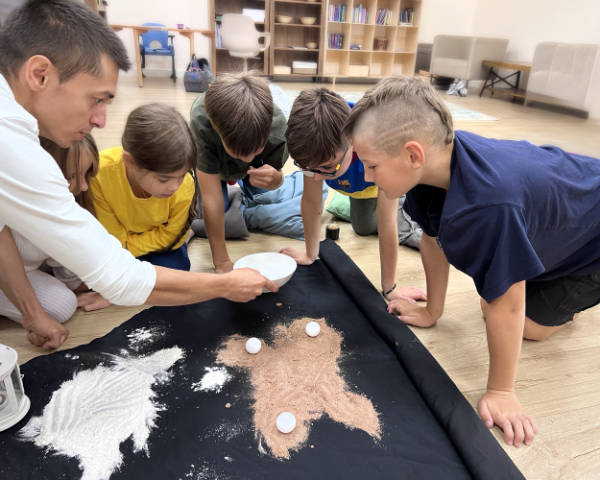
Our classes are designed to transform a child’s innate “why” into a lifelong passion for “how.” Students learn to hypothesize, experiment, and analyze, developing the critical thinking and self-motivation to solve real-world problems. They explore the interconnectedness of life through a dynamic, hands-on curriculum:
Our approach is deeply experiential. Learning provides real-world application through:
Students graduate as innovative, empathetic problem-solvers, ready to steward the Earth with responsibility and confidence.
- Life Sciences: Zoology, botany, and human development, emphasizing ecosystems and biodiversity.
- Physical Sciences: The properties of matter, energy, forces, and simple machines.
- Earth & Space Sciences: Geology, meteorology, and astronomy, connecting students to their planet and the cosmos.
- Technology & Innovation: Coding, technological art, and robotics, encouraging eco-entrepreneurship and creative problem-solving.
Our approach is deeply experiential. Learning provides real-world application through:
- In-Nature Studies: Observing biomes, tending to outdoor education centers and farms, and conducting field research.
- Practical Projects: Building mechanical inventions for science fairs, life cycle projects with chickens and butterflies, growing their own vegetables, etc.
Students graduate as innovative, empathetic problem-solvers, ready to steward the Earth with responsibility and confidence.
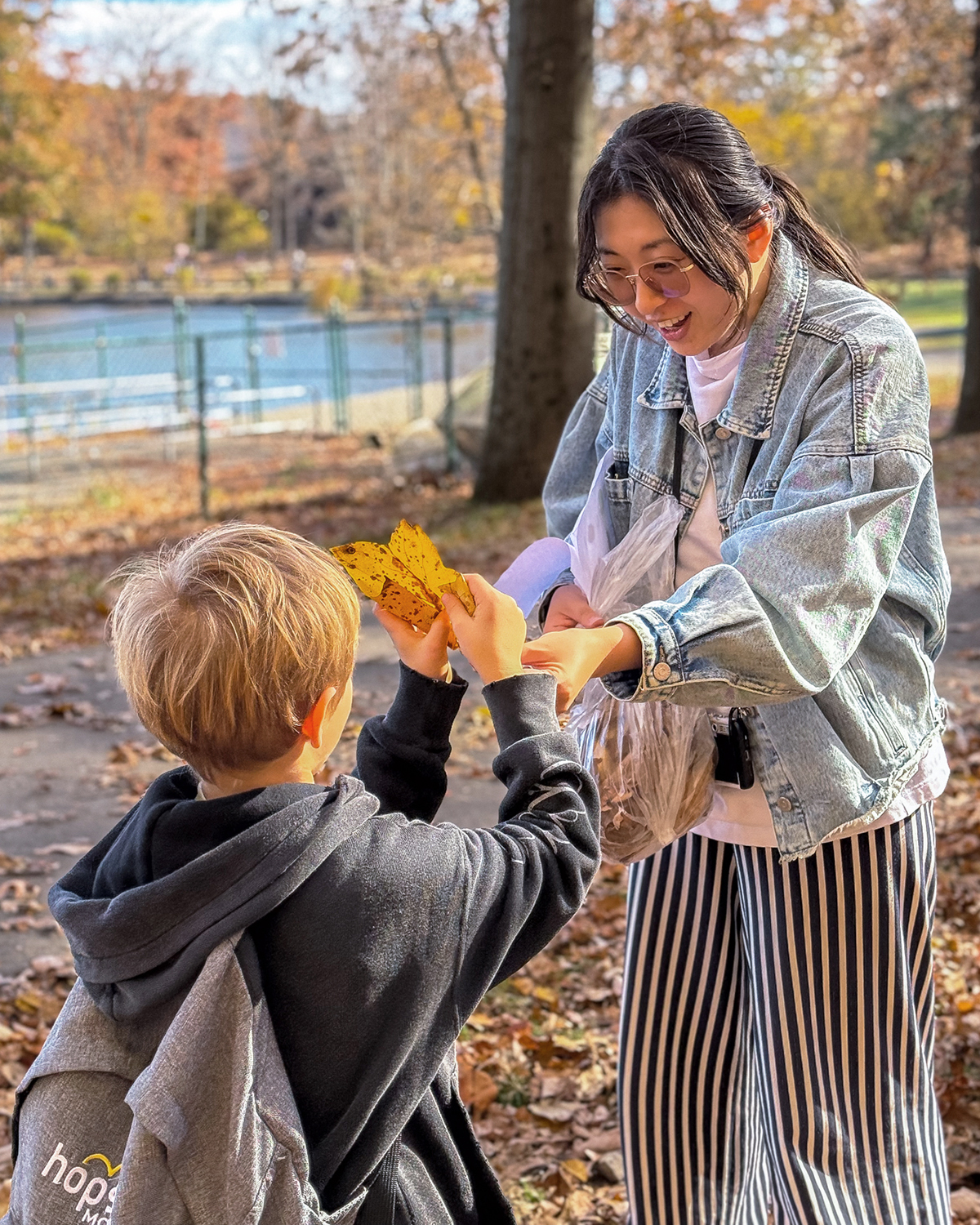
Our curriculum is a commitment to taking learning beyond the city and into the heart of nature. By regularly immersing students in diverse local ecosystems—from state parks to botanical gardens and preserves—we foster a deep, lasting connection to the environment and a sense of responsibility for its well-being. These excursions are active field trips where students:
As a result, students make direct connections between their outdoor discoveries and their classroom studies in science, geography, and culture, enriching both. This direct engagement nurtures a profound appreciation for our planet. It inspires students to become mindful stewards of the environment, embodying the principles of peace education and eco-entrepreneurship as they learn to protect the world they will inherit.
- Conduct Biome Studies: Observe seasonal changes, animal behavior, and plant life to understand the unique features and delicate balance of local ecosystems.
- Explore Indigenous Cultures: Learn about the deep historical connection between people and the land.
- Engage in Conservation Workshops: Participate in activities that highlight the importance of biodiversity and conservation.
As a result, students make direct connections between their outdoor discoveries and their classroom studies in science, geography, and culture, enriching both. This direct engagement nurtures a profound appreciation for our planet. It inspires students to become mindful stewards of the environment, embodying the principles of peace education and eco-entrepreneurship as they learn to protect the world they will inherit.
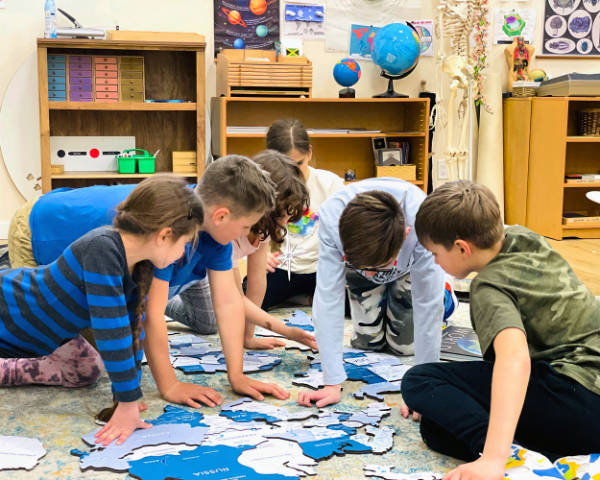
Our curriculum moves beyond maps and dates to provide a framework for understanding our interconnected world. Through hands-on Montessori materials like world maps and continent puzzles, students build a tangible connection to the world, progressing from their classroom to a global view.
They also analyze how geography influenced ancient civilizations and modern cities like Toronto. Students examine world events from multiple perspectives, understanding the link between location, resources, and culture:
They also analyze how geography influenced ancient civilizations and modern cities like Toronto. Students examine world events from multiple perspectives, understanding the link between location, resources, and culture:
- Critical Skills: Mapping evolves into critical cartography, where students chart economic, political, and cultural data to think systematically.
- Real-World Application: Project-based learning brings concepts to life. Students may simulate UN resource debates or design an eco-entrepreneurship plan to address geographic challenges.
- Core Values: This holistic approach fosters an international identity, critical thinking, and mindful stewardship by exploring how human needs are met within different global biomes.

The curriculum reveals the logic and beauty of mathematics, moving beyond memorization to build deep conceptual understanding. We treat math as a universal language for critical thinking and systems thinking.
Learning begins with the captivating History of Numbers. Students use specialized manipulatives to build a physical understanding of quantity, ensuring math is deeply understood before moving to abstract concepts. Students engage with mathematical principles in a logical sequence:
Our approach also cultivates real-world abilities:
Learning begins with the captivating History of Numbers. Students use specialized manipulatives to build a physical understanding of quantity, ensuring math is deeply understood before moving to abstract concepts. Students engage with mathematical principles in a logical sequence:
- The Four Operations: Achieving mastery of addition, subtraction, multiplication, and division.
- Number Theory: Exploring patterns with prime/composite numbers, GCF, and LCM.
- Fractions & Decimals: Deconstructing whole numbers through equivalencies, simplification, and all four operations.
Our approach also cultivates real-world abilities:
- Systemic Reasoning: Understanding number relationships to develop powerful systems thinking.
- Perseverance & Precision: Building self-motivation and resilience through problem-solving.
- Global Relevance: Applying math to understand patterns in nature, economics, and technology.

Our Geometry curriculum cultivates spatial reasoning and an appreciation for the mathematical patterns in nature and design. We move beyond formulas to teach students to see and think structurally. Students explore:
Geometry also serves as a bridge to practical and interdisciplinary skills:
This approach ensures students graduate as adept problem-solvers, able to analyze patterns and appreciate the geometric foundations of the world around them.
- Shape & Structure: Mastering 2D/3D shapes, symmetry, congruence, and scale.
- Angles & Measurement: Building a tangible understanding of spatial concepts.
- Formulas & Calculation: Calculating area, perimeter, volume, and circumference, including the use of π (pi).
- Advanced Theorems: Delving into the Pythagorean theorem, understanding the fundamental relationships within triangles.
Geometry also serves as a bridge to practical and interdisciplinary skills:
- Applied Math: Solving problems with ratios, percentages, and data interpretation.
- Scientific Connection: Applying geometric principles to measurements in science.
This approach ensures students graduate as adept problem-solvers, able to analyze patterns and appreciate the geometric foundations of the world around them.
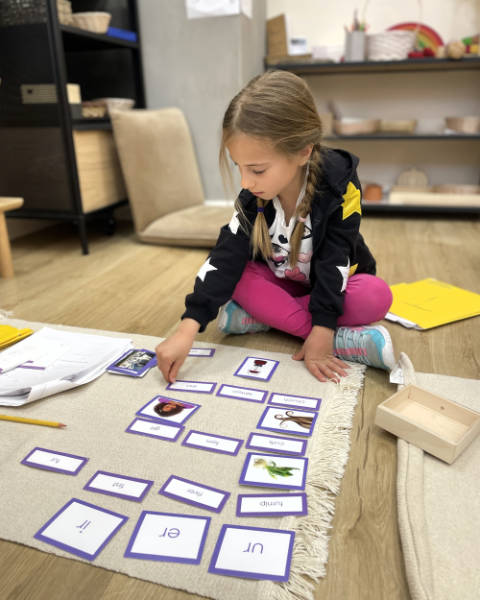
Our Language Arts curriculum is the foundation of all learning, designed to create articulate communicators and lifelong readers. We begin with "The History of Language” Great Story, exploring the evolution of communication across cultures.
Integrated Skill Development
Students hone their voice through word studies, interpretation, and TED Talks. This approach develops not just technical skill, but the empathy and clarity essential for peaceful dialogue and leadership.
Integrated Skill Development
- Spoken Language: Developing clear pronunciation, rich vocabulary, and fluency for confident self-expression in both social and academic settings.
- Reading & Analysis: Using a wide array of fiction and non-fiction texts to build knowledge, perspective, and critical reading strategies. Students explore poetry and literature to appreciate figurative language and storytelling.
- Writing & Composition: From constructing sentences with the Montessori Moveable Alphabet to mastering cursive for fluid thought-translation, students progress to crafting creative stories and well-structured compositions.
Students hone their voice through word studies, interpretation, and TED Talks. This approach develops not just technical skill, but the empathy and clarity essential for peaceful dialogue and leadership.
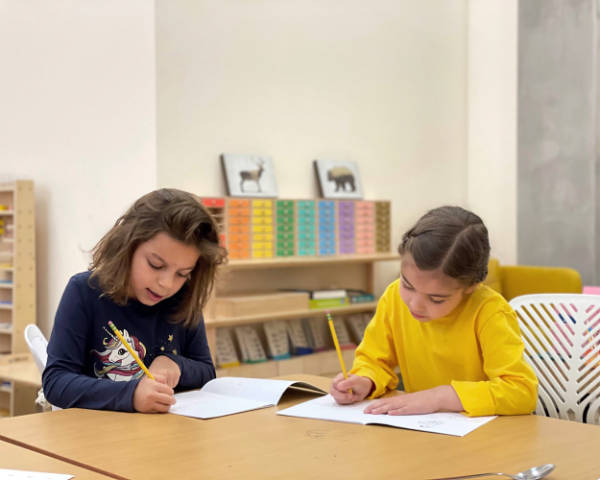
The Writer's Workshop builds a powerful foundation for clear and critical communication. Students master essential mechanics—grammar, spelling, and sentence structure—through a hands-on approach, including Montessori materials and traditional sentence diagramming.
This process transforms students into confident writers and critical thinkers, capable of structuring compelling arguments and expressing ideas with clarity.
- Sentence Analysis: Deconstructing and understanding the function of words, from the nine parts of speech to advanced syntax.
- Mechanics & Punctuation: Proficiency in all punctuation marks is developed through consistent practice in self-editing and peer-review sessions.
- Crafting Multi-Paragraph Essays: Writing well-structured essays for various purposes, supported by graphic organizers and outlines.
- Critical Analysis: Learning to analyze and critique persuasive arguments, honing their critical thinking skills.
- Academic Integrity: Mastering the skill of appropriately citing sources in non-fiction essays and research presentations.
This process transforms students into confident writers and critical thinkers, capable of structuring compelling arguments and expressing ideas with clarity.
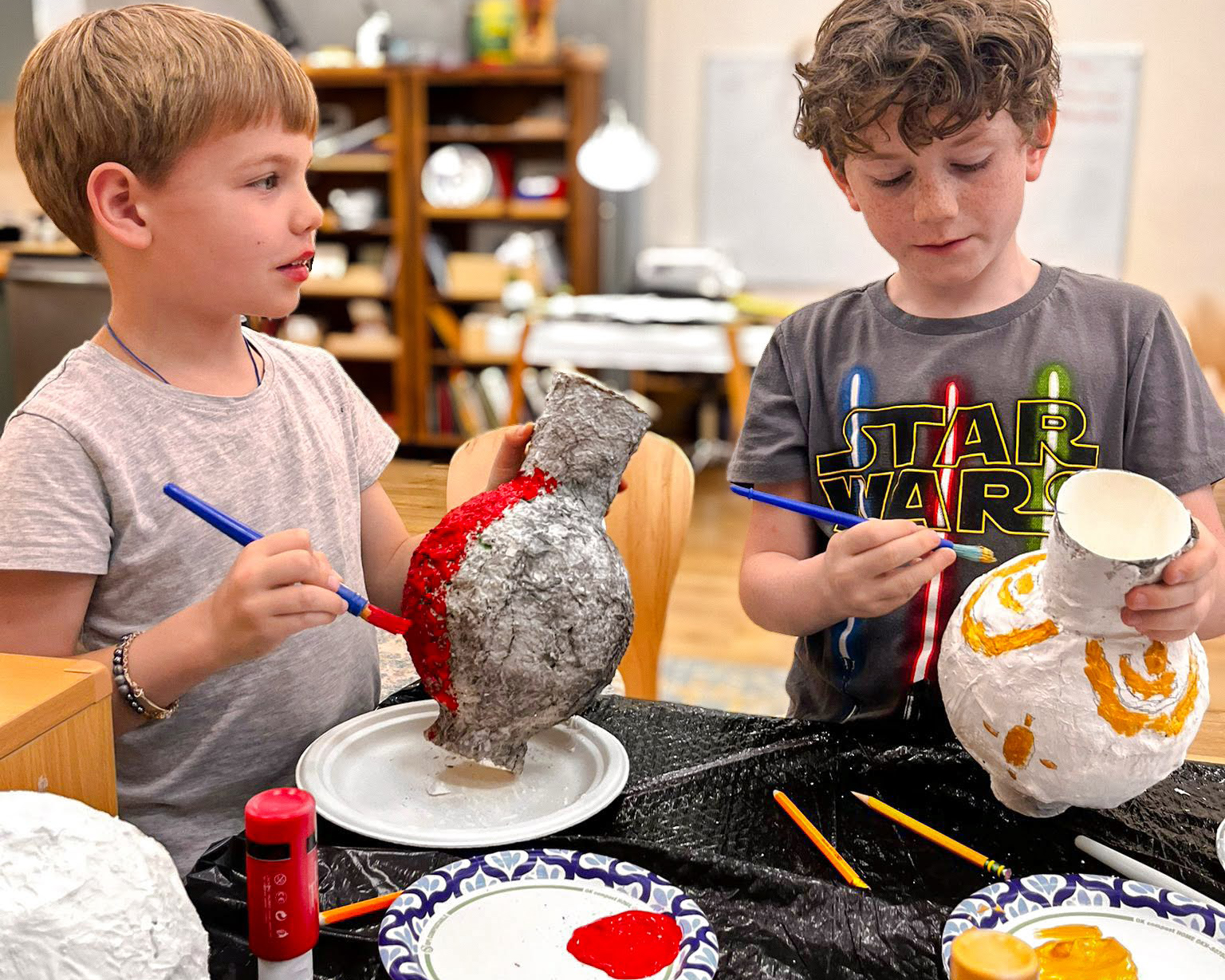
Art is a core language at our school, integrated across the curriculum while having dedicated time for skill development. We balance technical foundation with free expression. Our program empowers students to see themselves as innovative creators, not just learners. Students explore a wide range of mediums:
Learning Beyond the Classroom
Art comes alive through real-world experiences. Students showcase their work in school exhibitions, building confidence and communication skills. Regular trips to Toronto museums and outdoor sketching sessions connect classroom learning to the wider world of art.
- Traditional & Digital Arts: Painting, graphic drawing, watercolors, clay, and digital media.
- Eco-Conscious Creation: Using recycled materials to foster environmental stewardship.
- Artistic Literacy: Studying master artists to understand technique, style, and cultural context.
- Thematic & Emergent Projects: Art becomes a tool for representing academic concepts—from scientific cycles to historical events—allowing students to express their understanding in personal ways.
Learning Beyond the Classroom
Art comes alive through real-world experiences. Students showcase their work in school exhibitions, building confidence and communication skills. Regular trips to Toronto museums and outdoor sketching sessions connect classroom learning to the wider world of art.
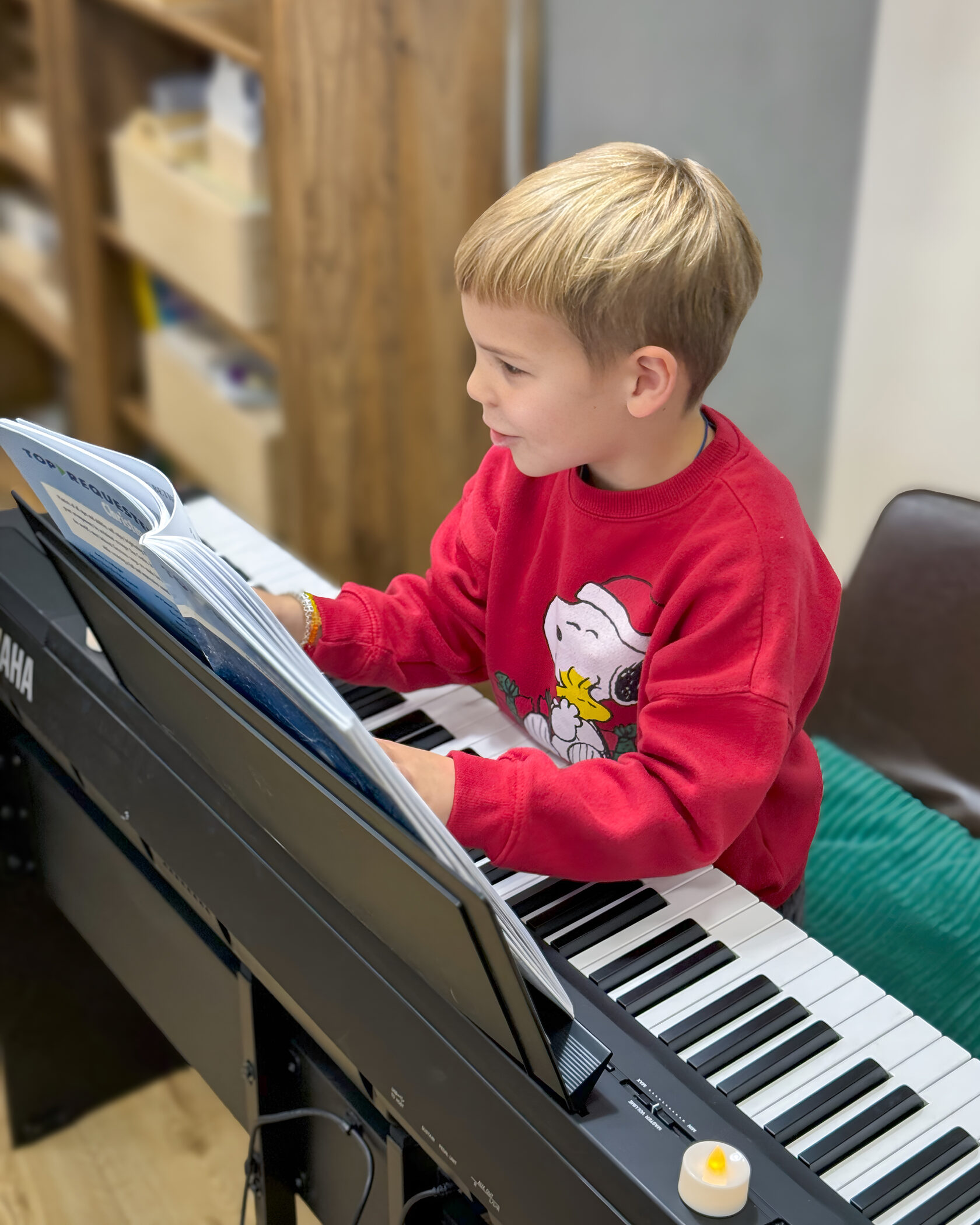
Our music classes move from foundational theory to instrumental mastery, fostering creativity, collaboration, and a deep appreciation for the universal language of music.
Building Community Through Sound
Music is a shared experience at our school. The program culminates in weekly community singing sessions, where all students and teachers harmonize together. This practice builds a vibrant sense of community, joyful self-expression, and confidence as students share their talents.
Our curriculum ensures music is not an isolated subject, but a vital thread that weaves together holistic development, discipline, and the joy of collaborative creation.
- Senior Kindergarten + Lower Elementary (5-9 y.o.): Students build a strong foundation through exploring rhythm, melody, and percussion, developing core music theory and reading skills.
- Upper Elementary (9-12 y.o.): Students apply their knowledge by learning to play the guitar and piano, understanding the relationship between instruments and written music.
Building Community Through Sound
Music is a shared experience at our school. The program culminates in weekly community singing sessions, where all students and teachers harmonize together. This practice builds a vibrant sense of community, joyful self-expression, and confidence as students share their talents.
Our curriculum ensures music is not an isolated subject, but a vital thread that weaves together holistic development, discipline, and the joy of collaborative creation.
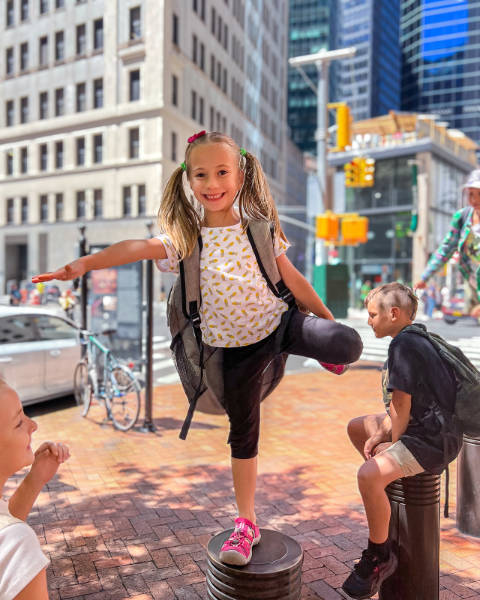
The vibrant city of Toronto is an extension of our campus. We actively integrate the city's rich resources—from museums and cultural centers to local shops and parks—into our curriculum, turning the urban environment into a dynamic, living classroom.
Students don't just visit the city; they learn to navigate and participate in it. Through purposeful excursions, they practice real-world skills:
These trips are not isolated events but are directly tied to classroom learning. A science unit comes alive at the Ontario Science Centre, while history is explored at Fort York. By engaging directly with their diverse community, students develop practical competence, self-motivation, and a deep, tangible connection to the world.
Students don't just visit the city; they learn to navigate and participate in it. Through purposeful excursions, they practice real-world skills:
- Financial Literacy & Planning: Budgeting allowances, purchasing classroom supplies or flowers, and understanding value.
- Navigation & Independence: Confidently navigating city infrastructure and public transport, grocery shopping, sending mail, etc.
- Community Engagement: Interacting with local artisans, business owners, and cultural institutions.
These trips are not isolated events but are directly tied to classroom learning. A science unit comes alive at the Ontario Science Centre, while history is explored at Fort York. By engaging directly with their diverse community, students develop practical competence, self-motivation, and a deep, tangible connection to the world.
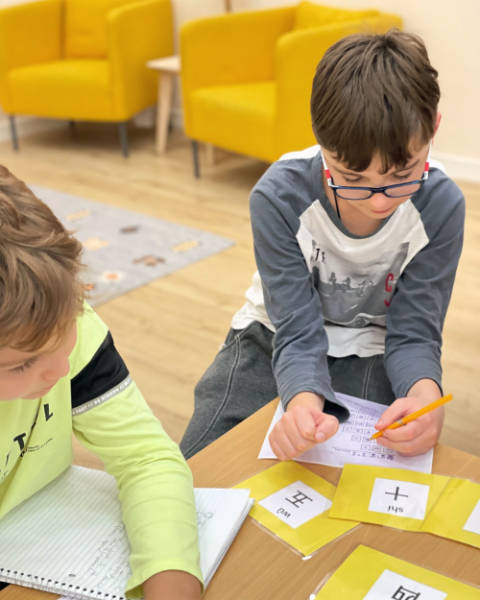
Our second language program is designed to do much more than teach vocabulary—it aims to shape agile, empathetic global thinkers. Students engage in Mandarin, French, or Spanish classes twice weekly, building proficiency in grammar, pronunciation, reading and speaking.
We believe language learning is a gateway to critical thinking and international identity. By acquiring a new language, students naturally:
This immersive linguistic and cultural experience prepares students for a diverse world. They don't just learn to communicate; they learn to connect, empathize, and engage with global themes as informed individuals.
We believe language learning is a gateway to critical thinking and international identity. By acquiring a new language, students naturally:
- Develop Cognitive Agility: Decoding new structures enhances problem-solving skills and mental flexibility.
- Gain Multiple Perspectives: A broader vocabulary allows children to see the world through different cultural lenses, a cornerstone of peace education.
- Deeper Appreciation: They learn to find richer meaning in poetry, music, and conversation, understanding nuance and context.
This immersive linguistic and cultural experience prepares students for a diverse world. They don't just learn to communicate; they learn to connect, empathize, and engage with global themes as informed individuals.
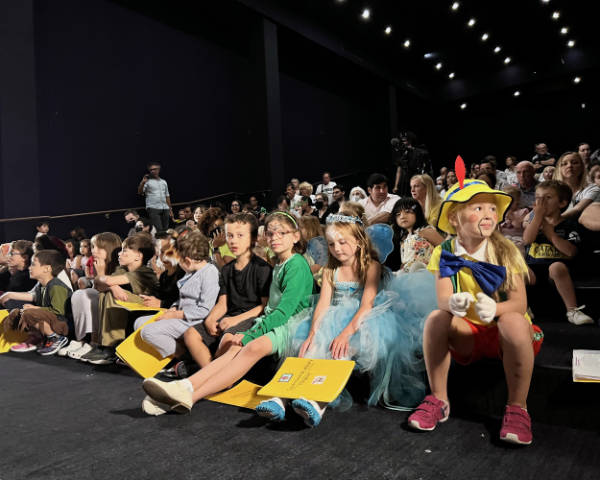
Theater is a powerful tool for building confidence, collaboration, and creative expression. Our elementary students don't just perform plays—they create them, writing three original productions each year. The process is hands-on and comprehensive:
Through the theatrical process, students learn to manage stage fright, embrace challenges, and discover new strengths. This journey culminates in grand performances on the big stage (ex. Carnegie Hall performance in 2025) for the community, celebrating their hard work and nurturing self-confidence and leadership.
Theater at our school is a transformative experience that teaches students to communicate effectively, collaborate, and present themselves to the world.
- Creative Collaboration: Contributing ideas and drawing inspiration from literature and history.
- Multidisciplinary Artistry: Writing music, choreographing dances, sewing costumes, and designing sets.
- Performance: Bringing stories to life by embodying diverse characters.
Through the theatrical process, students learn to manage stage fright, embrace challenges, and discover new strengths. This journey culminates in grand performances on the big stage (ex. Carnegie Hall performance in 2025) for the community, celebrating their hard work and nurturing self-confidence and leadership.
Theater at our school is a transformative experience that teaches students to communicate effectively, collaborate, and present themselves to the world.
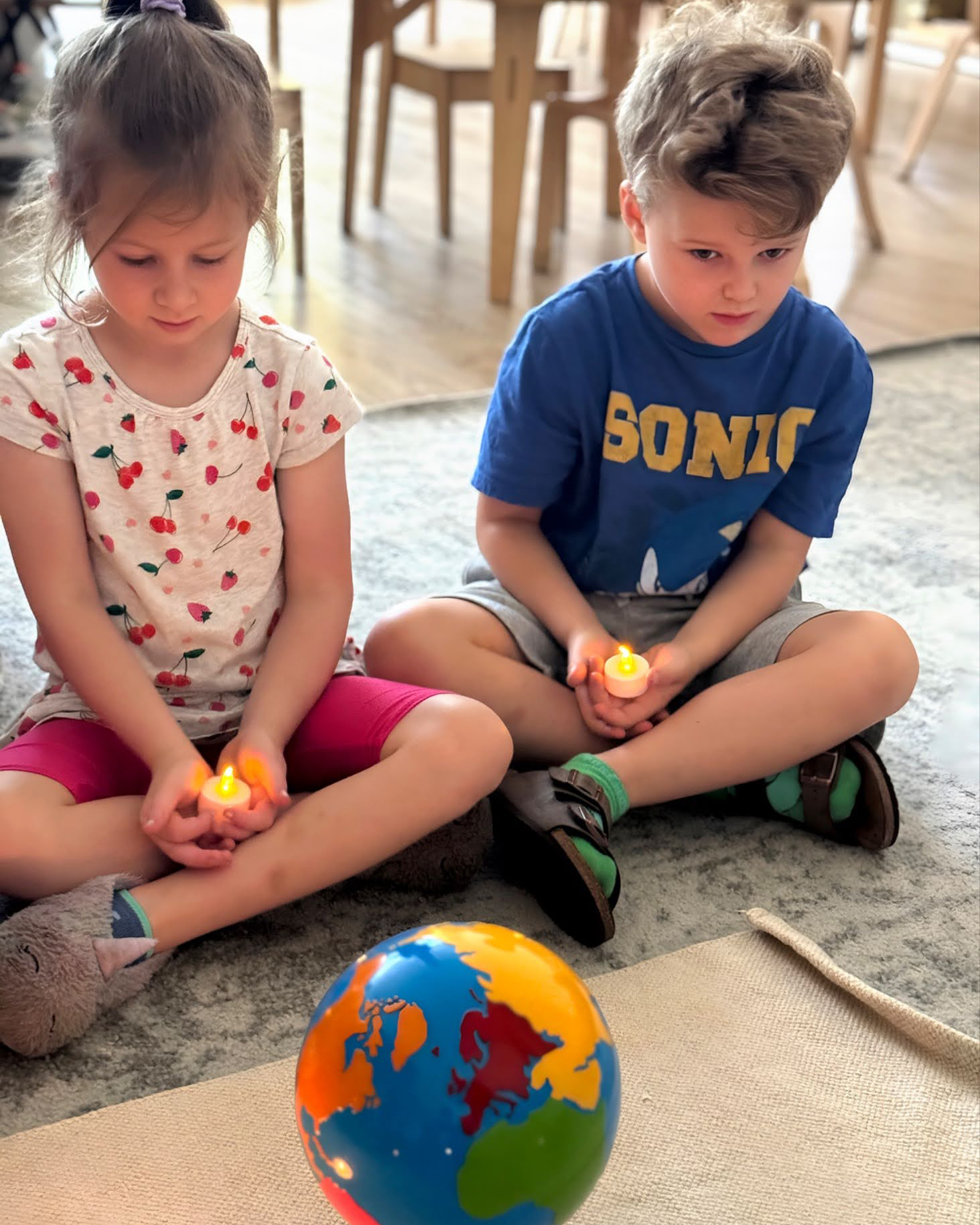
Our Peace Education curriculum is intentionally designed to equip students with the skills to build harmony within themselves, with others, and with the world. It moves beyond theory into daily, practical life skills in conflict resolution and empathy. We provide students with tangible strategies and tools to navigate social and emotional challenges:
This work is integrated with practices in mindfulness, meditation, and conscious breathing. Students learn to recognize their emotional state and develop strategies to self-regulate, restore focus, and build resilience. The result is the development of empathetic, self-aware individuals who value diversity, practice inclusivity, and are prepared to be responsible, peace-making global citizens.
- The Peace Shelf: A dedicated resource with tools like the Peace Rose and Talking Stick, which teach children to resolve conflicts respectfully by taking turns, speaking from the "I" perspective, and collaboratively finding solutions.
- Community Circles: Daily gatherings where students practice active listening, respectful communication, and sharing feelings in a safe, judgment-free space.
- Peace Contracts: Co-created agreements at the year's start on how we care for ourselves, each other, and our shared environment, fostering collective responsibility.
This work is integrated with practices in mindfulness, meditation, and conscious breathing. Students learn to recognize their emotional state and develop strategies to self-regulate, restore focus, and build resilience. The result is the development of empathetic, self-aware individuals who value diversity, practice inclusivity, and are prepared to be responsible, peace-making global citizens.
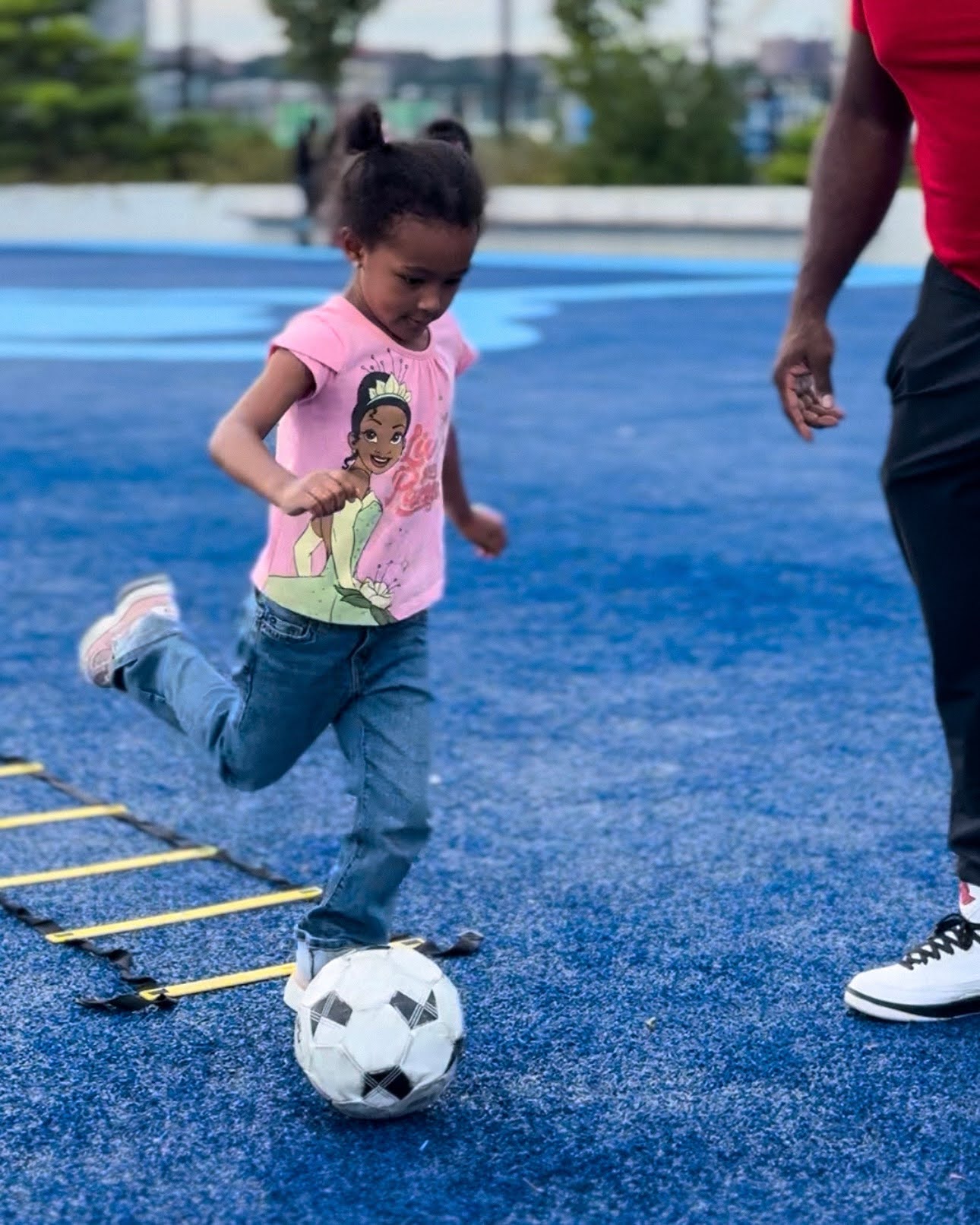
Our Health & Wellness program is built on the principle that movement is essential for cognitive development, emotional well-being, and holistic health. We integrate physical activity throughout the day to help children find balance.
Our program goes beyond traditional sports to include:
This comprehensive approach ensures students build strength, agility, and confidence while learning the importance of an active lifestyle for a healthy body and a focused mind.
- Active Breaks: Students enjoy a full hour of daily unstructured recess on our campus playground, plus daily walks and games in nearby parks, allowing them to play, explore, and socialize.
- Structured PE Classes: Weekly classes focus on developing gross motor skills, coordination, and fitness through fun, non-competitive games that teach teamwork and sportsmanship.
Our program goes beyond traditional sports to include:
- Team Sports: Soccer and tennis to foster cooperation and healthy competition.
- Expressive Movement: Dance and choreography to encourage creativity and physical expression.
- Mindful Practices: Yoga and mindfulness to cultivate inner awareness, balance, and self-discipline.
This comprehensive approach ensures students build strength, agility, and confidence while learning the importance of an active lifestyle for a healthy body and a focused mind.
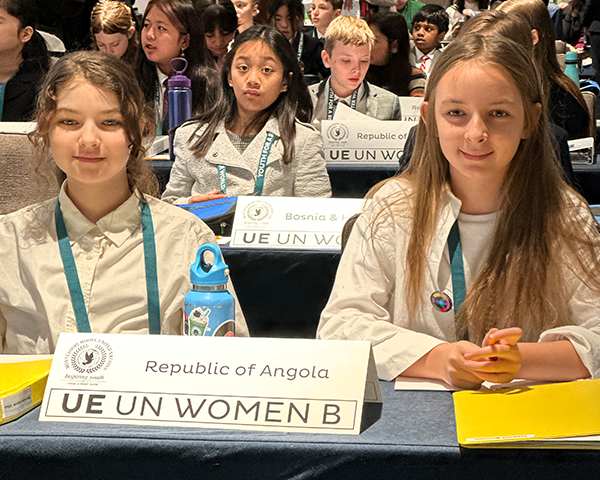
Our Upper Elementary students participate in the prestigious Montessori Model UN (MMUN), a capstone experience that brings our peace curriculum and international identity to life. This program transforms students into diplomats, tasked with addressing real global challenges through collaboration and critical thinking. Each student deeply researches an assigned nation (this year, Chile and Egypt), analyzing its history, culture, and political stance on the world stage. They draft position papers, negotiate with peers, and build consensus to propose viable solutions to current global issues, mirroring the actual UN procedures. The MMUN experience is a masterclass in essential 21st-century skills. Students hone their abilities in in-depth research, analysis, public speaking, diplomacy, critical thinking, problem-solving, and collaborative leadership. By participating in international conferences—from New York to Rome—our students don't just learn about the world; they actively engage with it. They return as confident, empathetic global citizens, equipped with the skills to be ambassadors for peace.